

For winter residents, second-home owners — and anyone traveling this season
You’ll leave in April. The house stays for July.
A season in the desert has three acts: the arrival, the good months, and the leaving. Here is how a house can take care of all three — and of itself when you are gone.
By the Ideal Automation team8-minute read
Every fall the cars come south. About seven in ten snowbird vehicles shipped to Arizona are delivered to the Phoenix metro, and in spring the same index shows them heading north again — rising from February and peaking in May.4 Many of their owners leave behind something much larger than a car: a house that will sit empty through the hottest months in America.
Maricopa County is the country’s busiest second-home market.1 Nearly half of Arizona’s vacant homes at the last census were empty because their owners live there only part of the year.2 In Maricopa, seasonal homes outnumber the vacant homes for rent and for sale combined.3
If you are one of those owners, this is the season you are here — the one window to set the house up properly, with you standing in it. This story follows the year in three acts.
I
October – January
The arrival
The best version of coming back is the one where the house is ready before you are.
Picture the flight landing at Sky Harbor at dusk. An hour before, from the gate in Minneapolis or Seattle or Calgary, you tapped one button. The thermostats came off their away settings. The water heater woke up. By the time the car turns into the drive, the landscape lights are on, the entry is lit, the shades on the view side are open, and the house is a comfortable 72 instead of a stale 85.
That one button is an “arriving” scene. It is also the mirror image of the one that matters more — the one you press when you leave. We will get there.

II
November – March
The good months
Patio weather, houseguests, holiday trips — and evenings that start early.
In early December the sun sets in Phoenix at about 5:20 PM.5 That makes winter the season when lighting does the most work: path and landscape lights that follow the actual sunset rather than a timer you reset twice a year, a patio that goes from dinner to fire-pit to lights-out on one keypad, and a great room that warms its color as the evening goes on.
It is also the hosting season. When the house is full, the useful kind of automation is the invisible kind: guest rooms brought up to temperature the morning family arrives, outdoor audio that anyone can turn down, and an “entertain” scene so nobody is hunting for switches. Our lighting design and pool and outdoor pages go deeper.

And then everyone travels anyway
Even full-time residents leave over the holidays — and the doorstep doesn’t take the week off. In the past year, 31% of Americans had a package stolen, with the average stolen package worth about $143.6
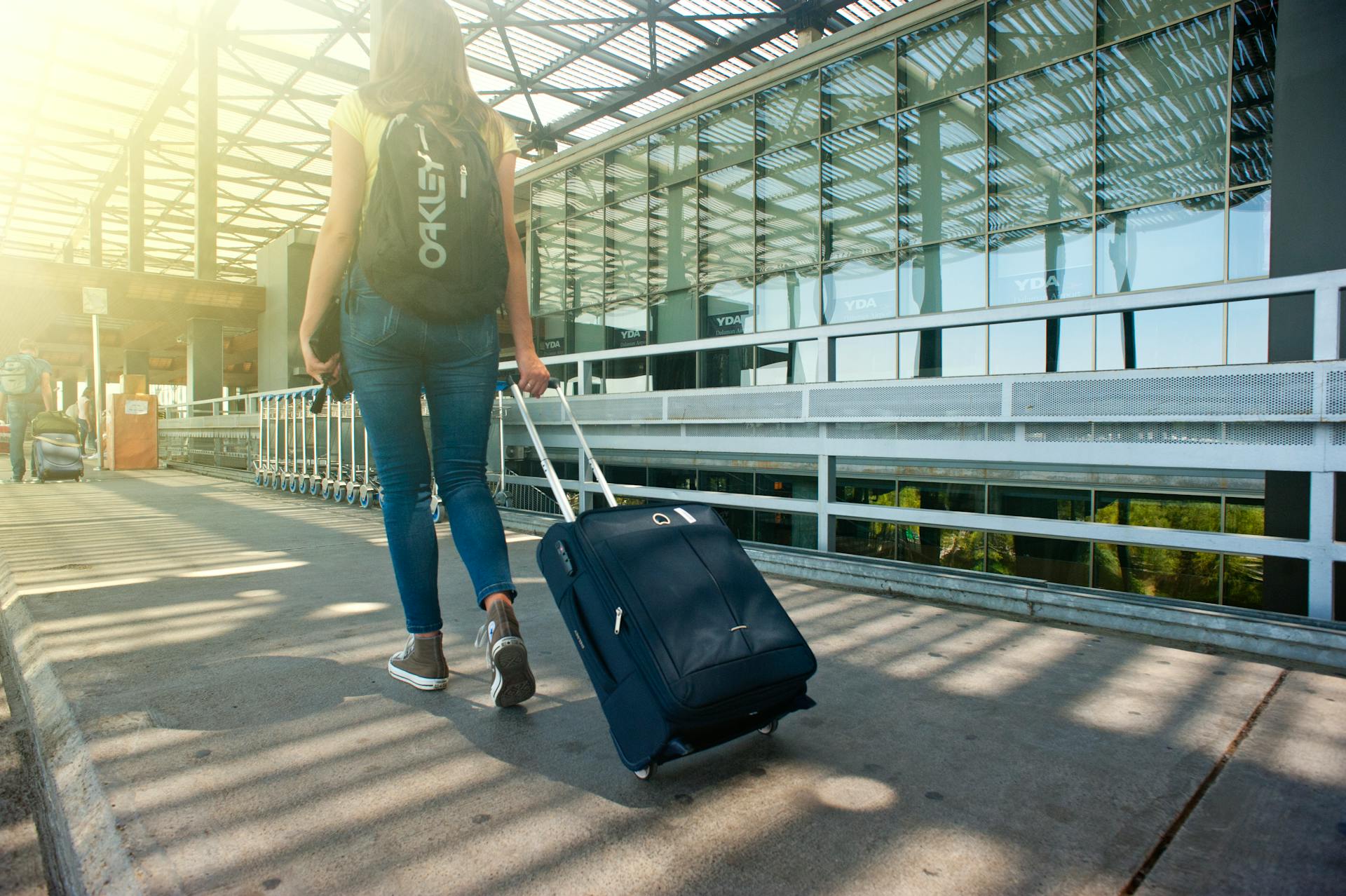

A video doorbell that tells you the moment a box lands, a smart lock that lets a neighbor grab it with their own code, and lighting that keeps the house looking occupied — the same tools that protect a seasonal home make a two-week trip far less nerve-wracking. See our security and access work.
III
February – May
The leaving
You lock the door and fly north. The house stays behind for a Phoenix summer.
Here is what it faces without you. In 2024, Phoenix stayed at or above 100 degrees for 113 consecutive days.8 In late August 2025, a single monsoon storm knocked out power to as many as 54,000 SRP and 12,000 APS customers.9 An empty house with a failed air conditioner, a split supply line or a tripped breaker can go days before anyone notices — and the bill for that delay is rarely small.
$15,400 — the average water-damage claim. A leak doesn’t wait for you to come home.7
So the departure scene does the opposite of the arrival one. Thermostats settle on a safe summer setpoint and report the indoor temperature to your phone. Leak sensors sit under the water heater, sinks and ice maker; if one gets wet, a valve on the main shuts the water off and you get a message. The lighting starts a lived-in routine — a few rooms, a believable evening, a little different every night. And if the power drops, you hear about it, and you hear again when it’s back.
None of it replaces a trusted person with a key. It makes sure that person gets the call in the first hour instead of the third week.

Before you book the flight north
Could your house handle six months on its own?
Eight questions. Answer them for the house as it is today, and you’ll see exactly where it would be flying blind.
Two minutes, from the couch
The empty-house test
Answer for the house as it is today. Nothing is saved or sent anywhere.
1From another state, could you see the indoor temperature right now — and change it?
2If the AC quit on a 112° afternoon, would something tell you within the hour?
3Are there leak sensors under the water heater, sinks and ice maker?
4Would the main water shut itself off if one of them got wet?
5Do your lights keep a lived-in evening routine — not a 6:00-sharp timer?
6Can you see who is at the door, and let in a trusted person, from your phone?
7If the power dropped during a monsoon, would you know when it came back?
8Could the house be cool, lit and ready the evening you fly back in?
Readiness
0/8
Your score and the gaps worth closing appear here as you answer.
Why the time to do this is while you’re here
A system you’ll run from two thousand miles away should be one you’ve stood in front of. Winter gives you the months to design it, install it, live with it for a few weeks, and change what doesn’t feel right — before the departure scene ever has to work for real.
We are a Phoenix-based team that designs, installs and supports these systems for homes across Scottsdale, Paradise Valley and the Valley. When you’re up north, the support line is still here.
Questions seasonal owners ask us
What smart home features matter most for a snowbird or second home in Arizona?
Start with what protects the house while it is empty: remote thermostat control with high-temperature and AC-failure alerts, leak sensors plus an automatic main water shutoff, and power-loss notifications. Then add what makes it feel occupied and easy to come back to — lived-in lighting scenes, a video doorbell and smart lock with guest codes, and a one-tap arrival scene for climate, lights and shades.
Can I control my Scottsdale house from out of state?
Yes. With a properly configured system and a reliable network, you can see indoor temperatures, adjust the thermostats, check cameras, lock or unlock doors for a trusted visitor, and run scenes from your phone anywhere with an internet connection. We set up remote access securely and test it before you leave.
Does smart lighting really make an empty house look lived-in?
Better than a plug-in timer. A timer turns the same lamp on at 6:00 every night; a lighting system can run a realistic evening pattern across several rooms that starts around sunset, varies night to night, and ends at a believable bedtime. It is one layer of security, not a replacement for cameras, locks and someone you trust checking in.
Do I still need a home-watch service if my house is automated?
Many owners keep one, and the two work well together. Automation tells you immediately when something changes — water where it shouldn’t be, a hot house, a door opened — while a home-watch professional can be the person who goes over to deal with it. We can route alerts to them as well as to you.
When should a seasonal resident schedule installation?
While you are here. Winter is the window to design the system, install it, and — most importantly — walk through it with you in person so you are comfortable running it from afar. Booking in November through February leaves time to test everything before you head north in spring.
A note before you go
Walk the house with us before you head north.
Tell us when you’re in town and when you leave. We’ll walk the house with you, point out where it’s most exposed while it’s empty, and give you an honest plan — including the parts you can skip.
Ideal Automation · Phoenix, AZ · AZ ROC #332501
Sources & notes
Figures were checked in November 2026. National statistics (package theft, insurance claims) are not Arizona-specific.
- 1.Maricopa County ranked No. 1 in the U.S. for second-home transactions, Jan. 1 – May 3, 2023 (Pacaso analysis of Optimal Blue data). Rose Law Group Reporter
- 2.2020 Census: 48.6% of vacant housing units in Arizona were held for seasonal, recreational or occasional use, versus 31.9% nationally (University of Arizona Eller College analysis). UA Economic & Business Research Center
- 3.U.S. Census Bureau: Maricopa County had more vacant units held for seasonal use — including part-time snowbird housing — than vacant units for rent or sale, and was one of only two non-coastal counties in the national top 10. census.gov, May 2023
- 4.Snowbird Migration Index (Ship A Car booking data): roughly 72% of snowbird vehicles shipped to Arizona go to the Phoenix metro; northbound shipments rise from February through April and peak in May. AZ Big Media, Sept. 26, 2026
- 5.Phoenix’s earliest sunset of the year is about 5:20 p.m., in early December. WeatherSpark
- 6.31% of Americans had a package stolen in the past year; an estimated 104 million packages; average value $143 (SafeWise 2025 Package Theft Report). SafeWise
- 7.Homeowners insurance, water damage and freezing, 2019–2023 average: $15,400 per claim; 1.50 claims per 100 insured homes per year (Insurance Information Institute). Triple-I
- 8.113 consecutive days at or above 100°F in Phoenix, May 27 – Sept. 16, 2024. KJZZ
- 9.Monsoon storm of Aug. 25, 2025: up to 54,000 SRP and 12,000 APS customers lost power at the peak. azfamily